Mastering Calm Under Pressure: How Cristiano Ronaldo Controls His Heart Rate During High-Stakes Moments

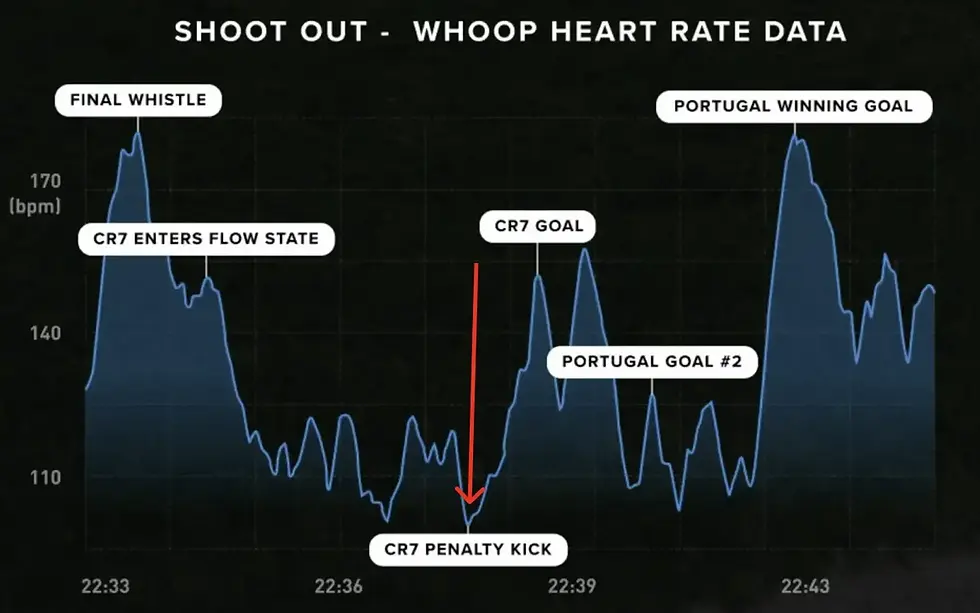
During a 2024 penalty shootout against Slovenia, Cristiano Ronaldo’s heart rate dropped dramatically from over 170 beats per minute (bpm) to about 100 bpm just before he took the penalty kick. This remarkable shift, recorded by his WHOOP strap, reveals his ability to control his physiological state under intense pressure. Such control likely comes from practiced relaxation techniques that help him lower his heart rate to a calmer level at the exact moment he needs to perform.
This example offers valuable insight for athletes who want to improve their performance in high-pressure situations by managing their physical and mental state.
The Importance of Heart Rate Control in Sports Performance
Heart rate is a key indicator of how the body responds to stress. When adrenaline spikes during critical moments, the heart rate can soar, causing tension, shaky hands, or rushed decisions. For athletes, these reactions can reduce accuracy and focus.
Cristiano Ronaldo’s ability to bring his heart rate down before taking a penalty kick shows how controlling this response can improve precision and calmness. Lowering the heart rate helps the body enter a state where muscles are steady, breathing is controlled, and the mind is clear.
Techniques That Help Athletes Lower Their Heart Rate
Ronaldo’s heart rate drop suggests he uses specific methods to calm himself. Athletes can adopt similar techniques to manage pressure:
Controlled Breathing
Slow, deep breaths activate the parasympathetic nervous system, which reduces heart rate and promotes relaxation.
Visualisation
Imagining the successful execution of a skill can build confidence and reduce anxiety.
Routine and Focus
Having a consistent pre-performance routine helps athletes stay grounded and avoid distractions.
Mindfulness and Meditation
Regular practice of mindfulness can improve overall stress management and help maintain calm during competition.
Applying Heart Rate Control in Your Training
Athletes can train their bodies to respond better under pressure by incorporating heart rate control exercises into their routines:
Use wearable devices to monitor heart rate during practice and competition.
Practice breathing exercises daily, especially before high-pressure drills.
Simulate pressure situations in training to build familiarity and reduce stress responses.
Develop a personalized pre-performance routine that includes calming techniques.
By training both the body and mind, athletes can improve their ability to stay calm and focused when it matters most.
What Ronaldo’s Example Teaches Athletes
Cristiano Ronaldo’s heart rate control during a penalty kick is a clear example of how elite athletes manage pressure. It shows that physical skill alone is not enough; controlling the body’s stress response is equally important.
Athletes who learn to lower their heart rate before key moments can improve accuracy, decision-making, and overall performance. This skill can be developed through consistent practice of relaxation techniques and mental preparation.


Comments